Quick answer · Updated November 12, 2026
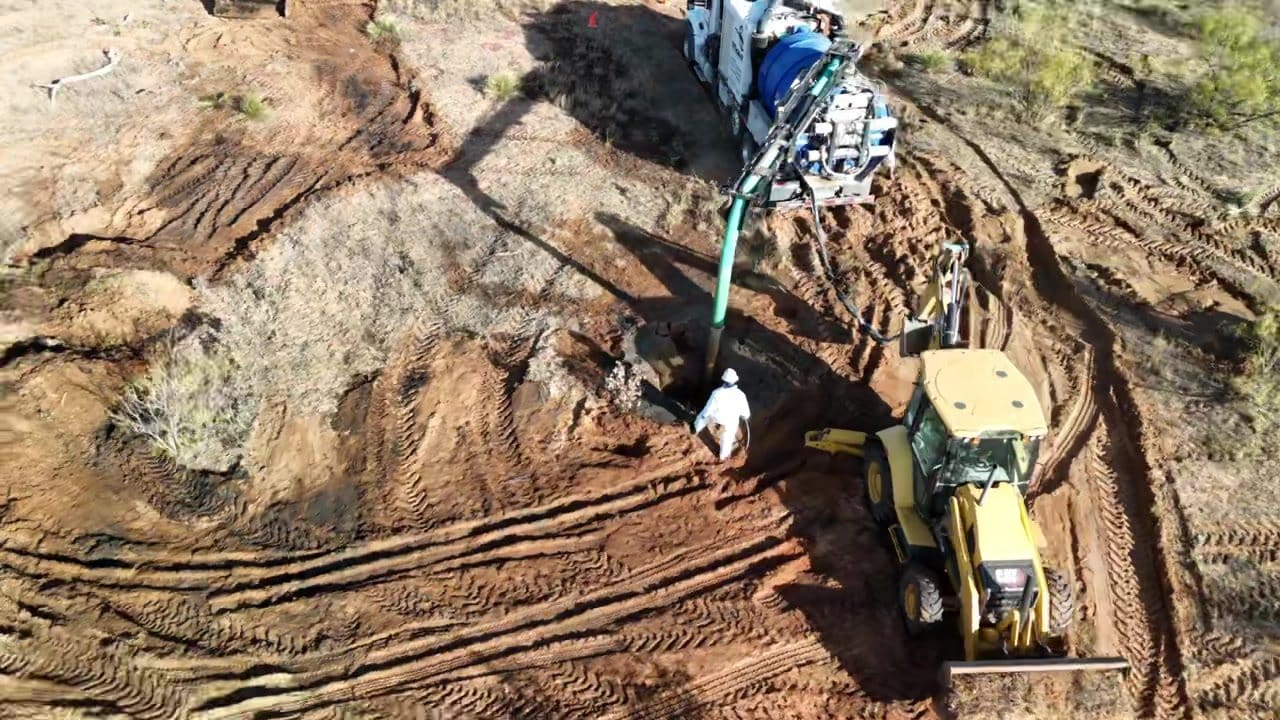
Use a hydrovac anywhere near a marked line, and a backhoe only after the line is exposed and you know exactly where it is. A hydrovac cuts the ground with water and vacuums it out, so nothing metal touches the pipe. On most oilfield jobs the operator requires it inside the tolerance zone.
A backhoe or excavator is faster and cheaper for open ground. The risk is the first few feet around a live line: a bucket tooth can dent, gouge or puncture pipe, and on a gas or produced-water line that is a release, a fire risk or an injury.
The usual sequence on a crossing or tie-in is hydrovac first to daylight the line and confirm depth, then the iron works around the exposed pipe. That gets you the speed of the excavator without guessing where the line is.
In Permian caliche, water cuts much faster than air, which is why most hydro excavation out here is done with water. We fill with fresh water near your job so you are not paying to haul it across the basin.
We run both, hydrovac trucks and excavation crews, out of Midland and Big Spring, so one call covers the whole dig.
Related
Request a crew
Need a crew?
Call or send the job. Tell us what you need, where and when, and we'll take it from there.
Requests & after hours: (940) 452-6716 · Office Mon–Fri 8–5: (432) 561-8201